
Islamic Religious Elites and Russian Colonial Policy in Samarkand, 1868–1917
Dr. Azim Malikov, Department of Asian Studies at Palacký University, Olomouc, Czech Republic
Islamic Religious Elites and Russian Colonial Policy in Samarkand, 1868–1917
This study examines the relationship between Islamic religious elites and Russian colonial policy in Samarkand from the Russian conquest of the city in 1868 to the collapse of the Russian Empire in 1917. It focuses on the changing political, social, and institutional position of Muslim religious scholars, including the ulama, qadis, imams, and other influential members of the Islamic establishment. The research explores how Russian colonial authorities attempted to regulate religious institutions, judicial practices, education, and charitable endowments while maintaining political stability and administrative control over the region. At the same time, it analyzes the strategies adopted by religious elites in response to colonial intervention, including cooperation, negotiation, adaptation, and resistance. Particular attention is given to the ways in which Islamic leaders preserved their authority within local communities and participated in debates concerning education, law, religious reform, and social change. The study argues that Russian colonial policy toward Samarkand’s Muslim religious establishment was neither uniformly repressive nor entirely conciliatory; rather, it developed through a pragmatic combination of administrative supervision and selective accommodation. Religious elites consequently occupied an ambiguous position, functioning both as intermediaries between the colonial administration and local society and as guardians of Islamic traditions and communal interests. By examining this interaction, the study contributes to a deeper understanding of Russian colonialism in Central Asia and highlights the agency of Muslim religious actors in shaping Samarkand’s political and intellectual landscape during the late nineteenth and early twentieth centuries.
BIO
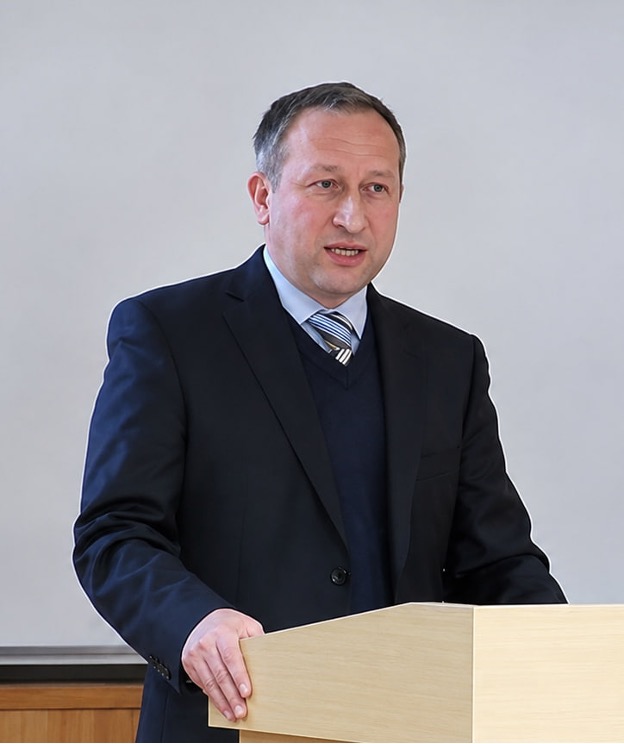
Dr. Azim Malikov is currently a faculty member in the Department of Asian Studies at Palacký University, Olomouc. From 2018 to 2022, he participated in the project Sinophone Borderlands – Interactions at the Edges. He previously served as a Senior Research Fellow at the Department of Anthropology and Ethnology, Institute of History, Academy of Sciences of the Republic of Uzbekistan, Tashkent, and was a Visiting Scholar at Harvard University in 2003. From 2004 to 2005, he directed the Centre for the Study of the History of Uzbekistan at Samarkand State University. Between 2010 and 2013, he was a Senior Research Fellow at the Max Planck Institute for Social Anthropology in Halle (Saale), Germany. He also held a Foreign Visiting Fellowship at the Slavic-Eurasian Research Center (SRC), Hokkaido University, Sapporo, Japan (2017–2018).